ISLAS
Mónica Parada
Solo Exhibition | REM Project Venezia, Venice, Italy
Curatorial Text by REM Escobar
November 28th, 2026 – March 28th., 2027
Islands are places of both separation and encounter. Defined by their geographical boundaries yet shaped by centuries of movement, exchange, migration, and cultural transformation, they reveal a fundamental paradox: what appears to divide territories often becomes the very element that connects them.
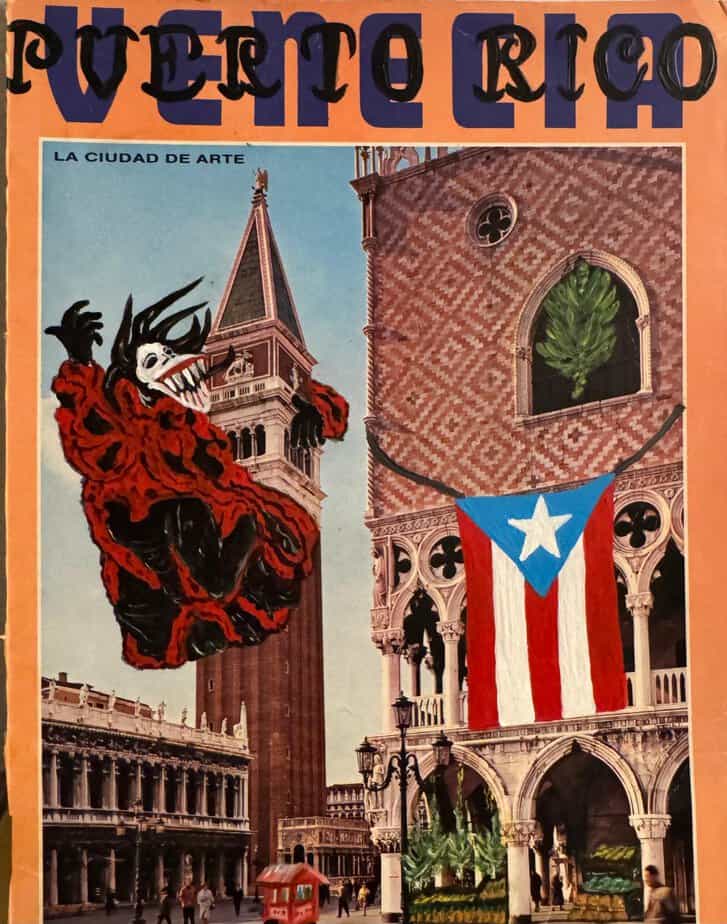
ISLAS, a solo exhibition by Puerto Rican artist Mónica Parada, brings into dialogue two distinctive island geographies: the island of Venice, Italy, and the island of Puerto Rico. Separated by the Atlantic Ocean and shaped by different historical, political, and cultural circumstances, both islands have developed identities deeply connected to water, maritime exchange, collective memory, and the continuous negotiation between local life and the outside world.
Parada’s relationship with Venice extends beyond the presentation of this solo exhibition. Her participation in the 61st Biennale di Venezia, as a collaborating artist in the Official Collateral Event Baile, Botella y Baraja, establishes an important connection between her artistic practice and the cultural landscape of the city. Through her participatory sculptural tables inspired by Puerto Rican brisca and domino traditions, Parada brings elements of Caribbean social life into an international context, transforming familiar spaces of gathering and play into platforms for cultural exchange. With ISLAS, this relationship takes another dimension, allowing the artist to develop a more intimate dialogue between her Puerto Rican origins and the Venetian environment.
Venice emerged from an extraordinary archipelago within the Venetian Lagoon, developing into a maritime republic whose influence extended across Mediterranean trade routes. Its relationship with water shaped not only its architecture and economy but also its political and cultural identity. Puerto Rico, strategically positioned at the entrance to the Caribbean, developed as an important colonial territory and maritime stronghold within the Spanish imperial system. Its history reflects the complex intersections of Indigenous Taíno heritage, African presence, European colonization, and the continuing affirmation of Puerto Rican cultural identity and self-determination.
These histories are not interchangeable, nor do they represent equivalent experiences of power and colonization. Yet their maritime identities offer an opportunity to consider how geography, commerce, cultural encounters, and historical forces shape the character of an island and the lives of the people who inhabit it.
Beyond their geographical and historical landscapes, both islands share another defining characteristic: the vitality of their public celebrations and cultural traditions. The Carnival of Venice, with its masks, elaborate costumes, anonymity, and theatrical traditions, transforms the island into a stage where identity and social conventions become fluid. Across Puerto Rico, carnivals and patron saint festivals transform towns and public spaces into collective expressions of cultural identity through music, dance, traditional crafts, colorful costumes, and community participation. The vejigante tradition, particularly associated with the Carnival of Ponce, represents one of the island’s most recognizable cultural expressions, bringing together African, Spanish, and Caribbean influences through its distinctive masks, vibrant colors, and theatrical presence.
Although expressed through different cultural languages, these celebrations reveal the importance of performance, gathering, and collective expression in the life of both islands. They also invite us to consider who occupies public space, who participates in shaping cultural identity, and how traditions preserve a sense of belonging across generations.
Today, both islands face the pressures of mass tourism, urban transformation, gentrification, and the displacement of local residents. Their international visibility and cultural appeal coexist with increasingly complex questions about the preservation of community life and the future of their historic neighborhoods and territories. Beneath the beauty that attracts visitors from around the world lies a fundamental question: what happens when a place becomes more recognizable to the world than it is accessible to the people who call it home?
It is within this broader conversation that Mónica Parada’s artistic practice becomes central to ISLAS. Through her work, the artist establishes a visual and conceptual meeting point between territories, exploring the relationships between identity, memory, cultural belonging, and the human experience of place. Rather than illustrating a comparison between two geographical locations, her work opens a space in which their histories and contemporary realities can enter into dialogue. Parada’s perspective, rooted in Puerto Rico yet presented within the Venetian context, invites us to reconsider the island not simply as a geographical condition, but as a living territory shaped by its people, traditions, and evolving cultural expressions.
In this encounter, Venice and Puerto Rico are neither romanticized nor reduced to their familiar images. They emerge as living environments, carrying the marks of their histories while negotiating the challenges of the present. Their shores, harbors, streets, festivities, and communities become part of a wider reflection on the relationship between cultural identity and the territories that sustain it.
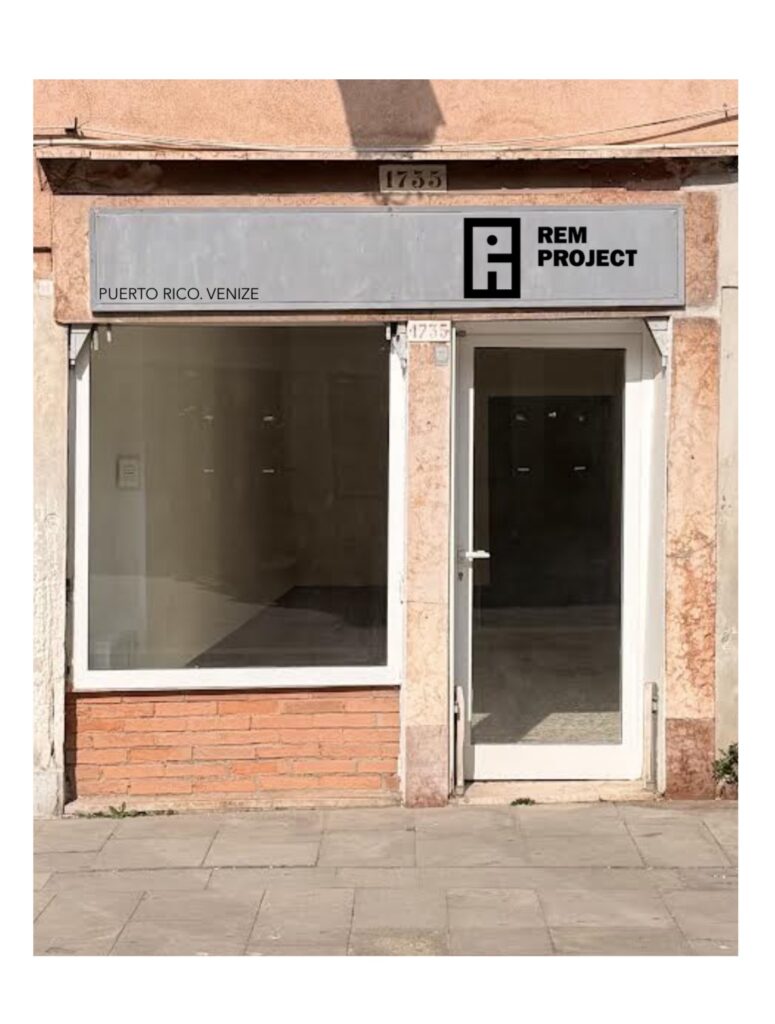
The exhibition also marks the inauguration of REM Project Venezia, directed by Veronica Piras, establishing a new platform for artistic exchange between Puerto Rico, Italy, and the international art community. Under her direction, the gallery opens a new chapter in REM Project’s international presence, creating a meeting point where artists, ideas, and cultural perspectives can converge. Presenting Mónica Parada in Venice is therefore both an artistic statement and an invitation to encounter Puerto Rican contemporary art within a broader international conversation.
Perhaps an island is never truly isolated. Its shores are thresholds, its waters are routes of encounter, and its cultural memory travels far beyond its geographical limits. Between Venice and Puerto Rico, ISLAS reveals that distance does not necessarily imply separation, and that the identity of a place is never fixed, but continually shaped by the people who inhabit it and the stories they carry.
Two islands. Distinct histories. A shared dialogue across the water.
ISLAS invites us to look beyond geography and discover the cultural, historical, and human connections that bring territories together.
PRESS RELEASE:

LOCATION: